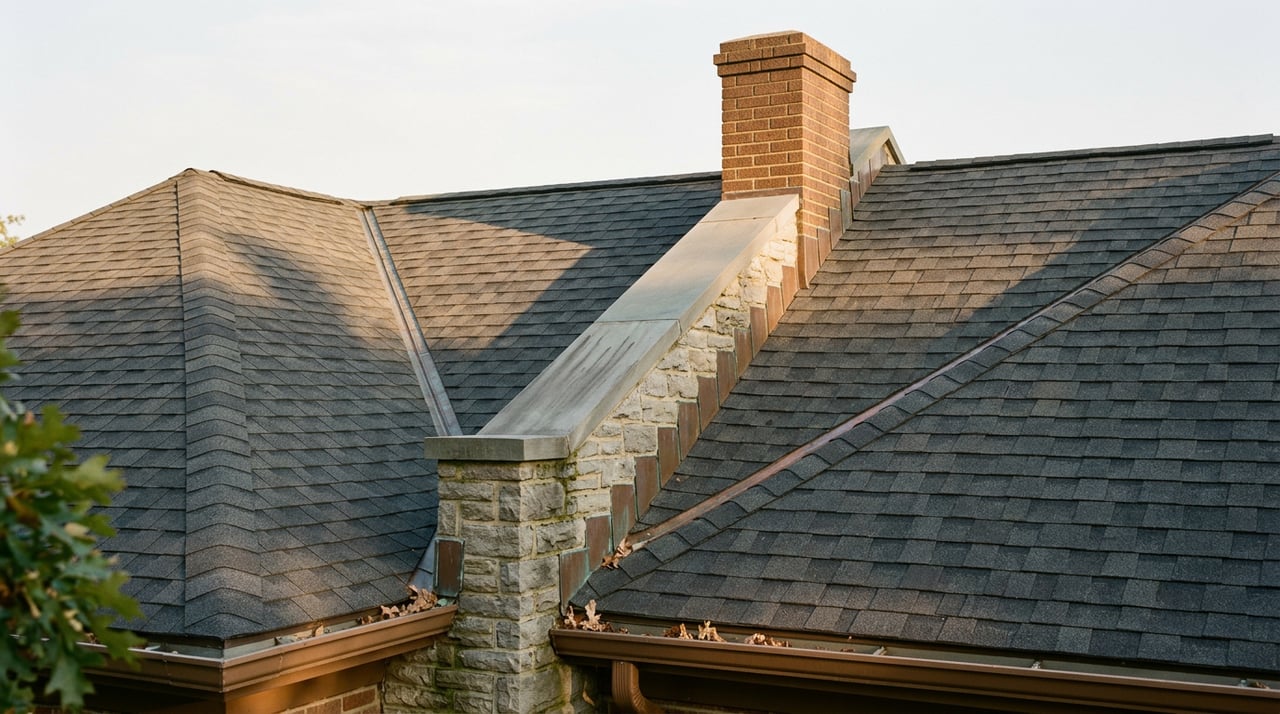
Walk down Trinity Avenue or Orange Avenue in Ambler Borough and you'll pass stone twins built more than a hundred years ago, many of them raised by stonemasons who came from Maida, Italy, the town Ambler still calls its sister city. The walls are thick. The porches sag in a way that reads as charm instead of neglect. Inside, the original details tend to hold up well: rich hardwood floors, high ceilings, millwork nobody builds like that anymore. And somewhere behind all of it, there's a wall that two households have been sharing since before either of their current owners was born.
Here's the part almost nobody selling one of these homes stops to think about: that wall is doing more legal work than it looks like it's doing, and the older and more beautiful the twin, the less likely anyone ever wrote down who's responsible for it.
Most residential sellers in Pennsylvania fill out the same state-mandated Seller Property Disclosure Statement before signing an agreement of sale. It's a long form, mostly checkboxes, mostly about roofs and basements and whether the well water has ever tested strange. Buried in the section on boundaries and easements is a single question asking whether the seller is aware of any shared or common areas, driveways, walls, and the like, or any maintenance agreements tied to them.
For a detached colonial, that question is easy. Check no and move on. For a twin, it's the whole ballgame, and most sellers answer it the way they'd answer a question about their gutters: quickly, from memory, without checking anything.
The Real Estate Seller Disclosure Law that governs this form only holds a seller to what they actually know. Nobody expects a homeowner to become a title researcher. But the law also doesn't protect a seller who knew something and left it off, and "I never looked into whether there's a written agreement about our shared wall" is a different situation from "there is no agreement." Those two answers land very differently if a dispute ever comes up about who pays to repair the shared roofline.
You'd think a wall that's outlasted three generations of owners would have generated some kind of documentation along the way. In practice, it's closer to the opposite, and that's the part of this that catches sellers off guard.
Newer attached housing, the carriage homes and townhome communities that have shown up around Ambler's edges in the last decade, almost always comes with a recorded declaration or a homeowners' association document that spells out who maintains what. That's just how modern subdivision and financing requirements work. A lender wants to see it. A title company wants to see it. So it exists.
The stone twins near downtown predate all of that. They were built one at a time, often by the same masons working down the block, at a moment when two neighbors splitting a wall was simply understood rather than contracted. That understanding got passed along informally, owner to owner, the same way people pass along which side mows the strip of grass between the driveways. It's usually accurate. It's almost never on paper.
So the general pattern looks something like this:
| Twin's Era | How It Was Typically Built | What You're Likely To Find On Paper |
|---|---|---|
| Pre-1930s stone twins near downtown | Built individually, often by the same crew, before formal shared-wall covenants were standard practice | Rarely anything recorded. More often an unwritten understanding passed between neighbors over decades |
| Mid-century brick twins farther from downtown | Built under more standardized municipal permitting | Occasionally a deed reference or plat note, but still inconsistent from block to block |
| Newer twin and carriage-home developments | Built under current subdivision and lending requirements | Usually a recorded declaration or maintenance agreement filed with the deed |
If you own one of Ambler's classic stone twins, you're most likely sitting in that top row. That's not a defect. It's just a gap that used to not matter, until the day it does.
Ambler doesn't give anyone much time to sort this out after the fact. The borough is small enough, and its transaction volume light enough, that a handful of closings in either direction can swing the month's numbers considerably. What holds steady across this year's reporting is the shape of the market rather than any single figure: well-priced, move-in ready homes in Ambler routinely draw multiple offers and go under contract in a matter of weeks, not months. That's a borough where buyers move fast and expect sellers to be ready.
A missing or uncertain answer on the shared-wall question doesn't usually kill a deal, but it's exactly the kind of thing that surfaces during a home inspection or a title search, right in the narrow window between accepted offer and closing. An inspector notices settling on the shared foundation and asks who's responsible for it. A title search comes back clean because there was never anything to record in the first place, which a buyer's attorney reads as a question mark rather than reassurance. A lender's underwriter, less familiar with how older boroughs handle attached housing, flags it and asks for clarification that takes days to produce.
None of that is a legal problem. It's a timing problem, in a market where timing is the entire advantage.
Ask around for what a home in Ambler is worth this year and you'll get answers that don't agree with each other, sometimes by hundreds of thousands of dollars. Part of that is genuine price movement. A bigger part is that the 19002 zip code covers everything from those stone twins to colonials to estate properties on wooded lots that push past a million, all folded into whatever single number a given source decides to report. A blended average isn't something a twin seller should anchor to. What's held consistent across local reporting this year is that Ambler's twin homes start in the low $300,000s, occupying a distinct entry-level tier that single-family colonials and larger properties simply don't compete in.
That's actually good news dressed up as a complication. Twins are the entry point that keeps Ambler's walkable downtown accessible to a wider range of buyers, which is part of why they move quickly when they're priced and presented well. But pricing a twin well means understanding it as its own micro-market, not a smaller version of the colonial three doors down. Presentation matters here in a very literal way. A buyer touring a twin is going to notice the shared wall, ask about it, and read the seller's answer as a signal of how carefully the whole property has been handled.
Getting ahead of the shared-wall question before a buyer asks it, rather than fumbling it during a walkthrough, is part of the same preparation that makes any listing perform: photographed well, staged well, and ready for the questions a buyer is already going to ask.
None of this is legal advice, and every twin's situation is different enough that a property-specific conversation with an attorney is worth the hour it takes.
Does every twin in Ambler lack a written party wall agreement? No. Newer twin and carriage-home developments typically have one on file. It's specifically the borough's older stone twins, the ones built before modern subdivision practices, where the paperwork is more often missing.
Does this affect buyers too, not just sellers? Yes. A buyer touring a twin should ask the same question the disclosure form asks. If the seller's answer is uncertain, that's worth raising with your own attorney before you're deep into inspection contingencies.
Could this actually delay a closing? It can, though it usually doesn't have to. Most delays come from the question surfacing late, during underwriting or inspection, rather than from the underlying situation itself. Addressing it before listing is almost always faster than addressing it mid-contract.
If you're weighing whether to list a twin in Ambler, or you're trying to figure out what a shared wall means for your specific property, Jamie Erfle has walked Montgomery County sellers through exactly this kind of detail before. Let's Connect and get your home ready for the questions before a buyer asks them.
Jamie offers a high level of service and attention, strong negotiation skills, and an eye for detail and design.
Let's ConnectCompass
8236 Germantown Ave. Philadelphia, PA 19118