Wondering why some Blue Bell homes spark fast interest while others sit a little longer? In a market where buyers often start online and compare every detail quickly, your price and presentation need to work together from day one. If you are thinking about selling, this guide will help you understand how to position your Blue Bell home with more confidence and fewer guesswork decisions. Let’s dive in.
Blue Bell is a small, boundary-sensitive market, so broad averages only tell part of the story. It sits within Whitpain Township, where the 2025 overall median sale price was $689,950, compared with $485,000 across Montgomery County overall. That gap is a helpful reminder that countywide numbers can give context, but they should not set your list price on their own.
Blue Bell-specific figures also vary depending on the source and the exact area measured. Realtor.com reported a Blue Bell median listing price of $850,000 and a median sold price of $673,750, while the 19422 ZIP code showed a median listing price of $750,000 and a median sold price of $701,250. Redfin’s Blue Bell snapshot showed a median sale price of $685,840.
Those differences are not necessarily contradictions. They reflect how small markets shift based on boundaries, timing, and property mix. In practical terms, that means your home should be priced from recent comparable sales in the same area, property type, and condition range, not from a single headline number.
A detached home with updated finishes should not be measured the same way as an attached property with a different maintenance profile. Blue Bell includes a mix of homes, and buyers are comparing within those categories first. The tighter your comp selection, the more believable and competitive your pricing will feel.
That matters because well-positioned homes are still selling very close to asking. Realtor.com showed a 100% sale-to-list ratio in Blue Bell and in 19422, while Redfin showed Blue Bell at 101.2%. In other words, pricing well does not mean pricing low. It means pricing in a way that makes sense for the right Blue Bell buyer.
Many sellers think of pricing as a separate decision from marketing, but buyers do not experience it that way. They see the photos, the features, the condition, and the price all at once. If one part feels out of sync, they often move on.
That is why your list price should support the full story of the home. A strong pricing strategy is really a marketing strategy built on local data, presentation quality, and buyer expectations. When those elements line up, you create more credibility from the start.
National seller research also supports this approach. In 2024, 90% of sellers used a real estate agent, and sellers most wanted help pricing competitively, marketing the home, finding a qualified buyer, and selling within a specific timeframe. For you, that means pricing should be handled as part of the plan, not as a stand-alone guess.
Before a buyer schedules a showing, your listing usually has to win online. That is especially true in Blue Bell, where 96.9% of households had a broadband subscription according to local planning data. In a highly connected market, presentation quality is often noticed immediately.
Buyer behavior backs that up. A 2024 buyer study found that 52% of buyers found the home they purchased on the internet, while 28% found it through a real estate agent. Among buyers who used the internet, photos were the most useful website feature for 66%, detailed property information for 65%, floor plans for 47%, virtual tours for 33%, and videos for 21%.
The takeaway is simple. Your home has to read clearly and attractively on a screen before it can shine in person. Clean visuals, accurate details, and a thoughtful layout of information can help buyers decide your home is worth seeing.
In online listing photos, buyers tend to react first to overall feel, light, scale, and condition. They are often asking themselves whether the home feels move-in ready, well cared for, and worth the price. If the answer is not obvious, they may skip to the next listing.
That does not mean your home needs a full redesign. It means the most important rooms should look calm, functional, and camera-ready. In Blue Bell’s price ranges, buyers are often selective, so visual consistency can make a real difference.
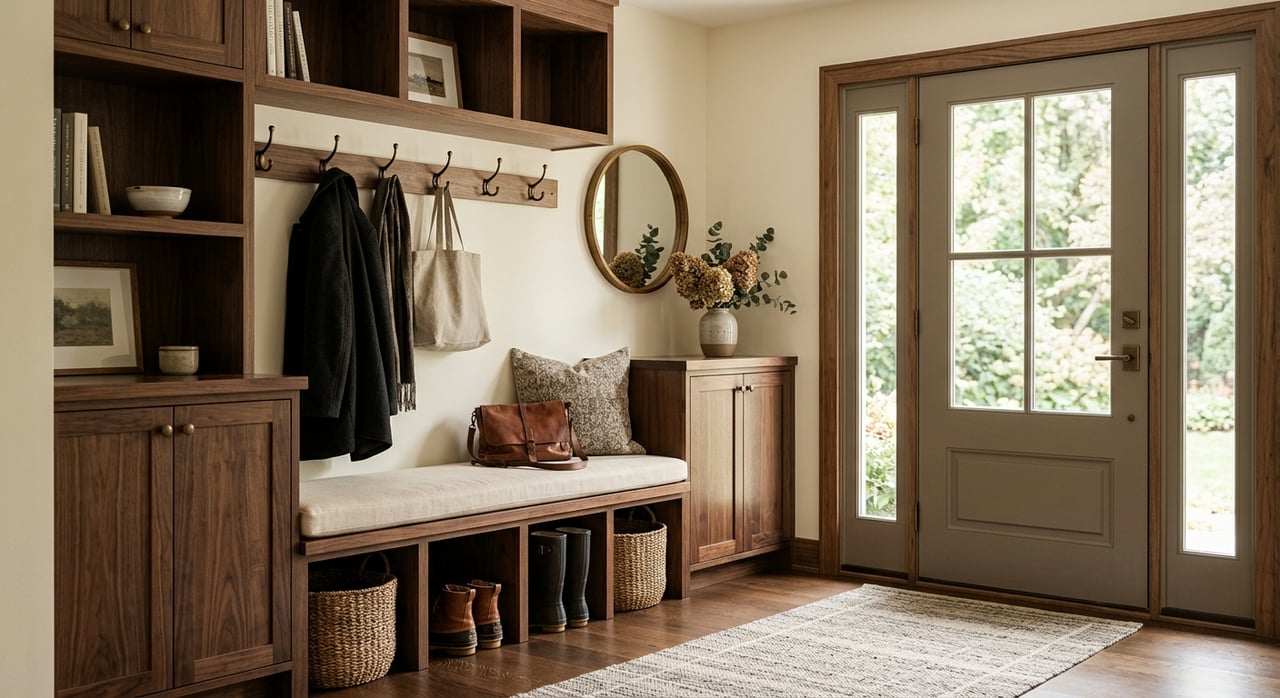
Staging is not about making your house look formal or overly styled. It is about helping buyers understand how the space lives. When a home feels easy to read, buyers can focus on its strengths instead of getting distracted.
NAR’s 2025 staging survey found that 83% of buyers’ agents said staging made it easier for buyers to visualize the home as a future home. Sixty percent said staging affected some buyers, and 26% said it affected most buyers. Another summary of the same research found that about 30% of professionals attributed a 1% to 10% value increase to staging.
The most commonly staged rooms were the living room, primary bedroom, and dining room. Those rooms shape the emotional first impression of the home and often appear early in listing photos. If you are deciding where to focus time and budget, start there.
For many Blue Bell sellers, the biggest payoff comes from sharpening the rooms that define daily living and entertaining. Focus first on spaces that create flow and help buyers understand scale.
A practical priority list often looks like this:
For detached homes, curb appeal and finish consistency are especially important. For larger homes, buyers often react strongly to whether the scale feels polished or disconnected. A thoughtful staging consultation and professional photography can help bring those spaces into focus.
Not every Blue Bell listing should be presented the same way. A detached home and a townhouse attract buyers who may care about different details, even when the price points overlap. Tailoring the message to the property type can improve both pricing confidence and buyer response.
Whitpain Township’s median sale price sits well above the countywide median, which suggests many buyers in this area will be selective about condition and presentation. That makes it even more important to show a clear value story from the moment your home hits the market.
For detached homes, buyers often notice curb appeal, room proportions, finish quality, and how consistent the updates feel from one space to the next. If the exterior looks inviting and the interior feels cohesive, the home is more likely to justify its price quickly.
This matters in Blue Bell because buyers comparing higher-priced homes tend to look closely at visual details. A home does not need to be brand new, but it should feel well maintained and intentionally prepared.
Attached homes usually need a slightly different approach. Redfin’s Blue Bell townhouse page reported 12 townhouses for sale at a median listing price of $585,000, with most homes staying on the market about 52 days and receiving 2 offers. That suggests townhouses may be more price-sensitive than larger detached homes.
For these properties, tighter comp selection is key. Your presentation should also make the value story easy to understand, especially around finishes, storage, parking, maintenance burden, and association-related convenience. Buyers often want a clear picture of what daily ownership will feel like.
Pricing and presentation get buyers interested, but seller preparation helps keep the transaction moving once you accept an offer. In Pennsylvania, the seller disclosure form requires sellers to disclose known material defects that are not readily observable. The form is not a warranty, and it is not a substitute for inspections.
The disclosure also addresses issues such as flooding, easements, hazardous substances, shared or common areas, and unresolved legal or code issues. Getting organized early can reduce last-minute stress and help you respond more confidently during the transaction.
If you are selling a condominium or cooperative resale, there is another important timing issue. The buyer must receive a certificate of resale from the association, and the buyer can cancel until the certificate is delivered and for five days afterward or until conveyance, whichever comes first.
That makes early document collection especially important for attached properties. If association materials are delayed, the transaction can lose momentum even when buyer interest is strong.
If you want the best possible result, think of your sale in three connected parts. First, price the home for the right Blue Bell segment using recent, relevant comparable sales. Next, prepare the home to perform online with staging, photography, and strong listing details.
Then, get your disclosures and property documents ready early so the sale can move efficiently once the right buyer appears. This combination of accurate pricing, elevated presentation, and solid prep is often what separates a listing that gets traction from one that needs a reset.
Selling in Blue Bell is not about chasing one market number. It is about understanding your property, your likely buyer, and the story your home tells the moment it goes live. If you want a thoughtful, design-minded strategy for pricing and presenting your home, Jamie Erfle can help you put the right plan in place.
Jamie offers a high level of service and attention, strong negotiation skills, and an eye for detail and design.
Let's ConnectCompass
8236 Germantown Ave. Philadelphia, PA 19118