Curious whether HOA living in Plymouth Meeting would make your life easier or just add another monthly bill? That is a fair question, especially if you want a home that cuts down on upkeep but still fits your budget and daily routine. In Plymouth Meeting, HOA living usually falls into two clear categories, and each one comes with a different mix of costs, responsibilities, and conveniences. If you are weighing a condo against a townhome, here is what HOA living looks like locally. Let’s dive in.
Plymouth Meeting is a smaller Montgomery County community with 7,452 residents, according to the 2020 Census. Census QuickFacts also reports a 56.8% owner-occupied housing rate, a median owner-occupied home value of $512,500, and median monthly owner costs with a mortgage of $2,668.
Locally, HOA housing tends to show up in two familiar forms. You will usually see either an amenity-rich condominium setup or a fee-simple townhome community where the HOA covers shared upkeep. That distinction matters because it affects not just your monthly fee, but also how hands-on you need to be as an owner.
Another big part of the appeal is location. Local listings describe communities like Plymouth Hill and Oakwood at Plymouth as having convenient access to major routes including I-276, I-476, and I-76. For many buyers, that combination of lower-maintenance living and commuter access is a strong selling point.
One of the clearest examples of condominium HOA living in Plymouth Meeting is Plymouth Hill Condominiums at 666 W. Germantown Pike. It is a 344-unit, nine-story condominium building completed in 1974.
Recent listings describe a full-service setup with a gated entrance, pool, fitness centers, tennis, basketball, meeting and party rooms, a library, concierge or lobby service, assigned parking, and 24-hour security. In one recent listing, the condo fee was $547 per month and included electric, water, sewer, trash, heat, air conditioning, cable, and internet.
That kind of setup can appeal to buyers who want a true lock-and-leave lifestyle. You may have less to manage personally, but the monthly fee often reflects that broader list of services and amenities.
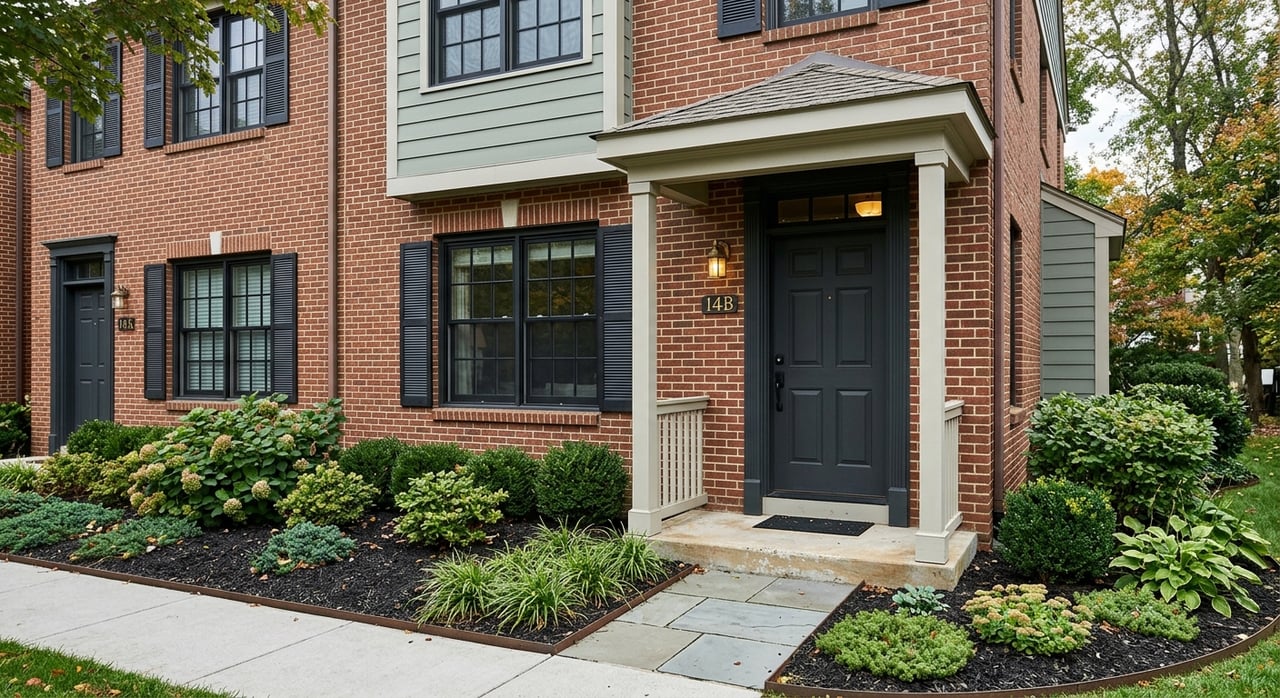
Oakwood at Plymouth offers a different version of HOA living. This townhome subdivision was built by Gambone Development around 2000, and homes are generally listed from about 1,900 to more than 4,000 square feet.
Here, the HOA coverage shown in recent listings is more focused on shared maintenance than on a resort-style amenity package. Examples include common-area maintenance, groundskeeping, snow removal, trash, road maintenance, management, and reserve funds. Recent HOA amounts listed for Oakwood include $295 per month and $340 per month.
If you want more square footage and a more house-like feel, this model may be a better fit. You still get help with exterior chores, but the fee structure is usually tied to maintenance and operations rather than a long list of included utilities and amenities.
One of the biggest mistakes buyers make is comparing HOA fees without looking at what those fees actually include. A higher monthly number is not always worse if it covers major services you would otherwise pay separately.
In Plymouth Hill, a recent listing showed a fee that bundled multiple utilities with building services, security, amenities, lawn care, snow removal, and trash. In Oakwood, the fee examples were narrower and centered on common areas, grounds, roads, reserves, trash, and snow.
That helps explain why condo fees in Plymouth Meeting can appear much higher than townhome HOA dues. You are often paying for two very different ownership experiences, not just two different properties.
Pennsylvania law gives condominium and planned-community associations broad authority to manage daily operations. Associations may adopt and amend bylaws and rules, set budgets and reserves, collect assessments, hire managers, and regulate the use and maintenance of common elements or common facilities.
For you as a buyer, that means the rules can meaningfully shape everyday living. Things like parking, pets, storage, rentals, amenity use, and exterior changes may all be governed by association documents.
The law also sets expectations around meetings and records. Condominium and planned-community bylaws must provide for at least annual meetings, notice procedures, agendas that include budget and assessment changes, and owner voting and proxy procedures.
Financial transparency is a major part of the picture as well. Pennsylvania requires financial records to be reasonably available, and larger associations must prepare annual financial statements. That gives buyers useful tools for understanding how a community is run before making a commitment.
This is one of the most important questions to ask before you buy. In a condominium, the association generally handles common elements, while you as the owner typically handle your unit.
In a planned community, such as a townhome neighborhood, the association generally handles common elements or common facilities, while owners handle their own homes unless the declaration says otherwise. The exact split can vary, so it is important to review the governing documents for the specific property.
In practical terms, you should not assume the HOA covers roofs, siding, windows, or other exterior components just because a property is in an HOA. The documents, not the marketing language, tell you where responsibility begins and ends.
When you are reviewing an HOA or condo association, the monthly fee is only part of the story. The bigger issue is whether the budget is realistic and whether the reserve fund is being maintained.
Pennsylvania disclosure rules require budgets to state how much is reserved for repairs and replacements, or state that no reserve is included. Resale disclosures must also show monthly assessments, unpaid assessments, other fees, proposed capital expenditures, and reserve amounts.
You should also ask about special assessments. A low monthly fee can lose its appeal quickly if the association is underfunded and owners may face large extra charges later.
Some HOA costs show up at closing instead of in your monthly payment. Pennsylvania law allows certain associations to charge a capital improvement fee on resale or transfer, and those funds must be kept in a separate capital account.
Public offering statements must also disclose any initial or special fees due at closing. In local practice, a recent Plymouth Hill building page showed a capital contribution fee on some units.
That is why it helps to ask early about transfer fees, capital contributions, resale fees, and any unpaid assessments tied to the property. These one-time costs can affect your total cash needed to close.
Before you move forward with an HOA property in Plymouth Meeting, it helps to go beyond the listing sheet. Ask direct questions so you understand both the lifestyle and the financial structure.
Here are some of the most useful questions to ask:
These questions can help you compare communities more clearly and avoid surprises after closing.
In Plymouth Meeting, HOA living is often about tradeoffs. A condo may offer a fuller-service experience with more shared amenities and more included expenses, while a townhome may offer more space and fee-simple ownership with less day-to-day exterior work.
That can make HOA living attractive for first-time buyers, downsizers, and busy professionals who want convenience without giving up a strong location. The right fit depends on how much maintenance you want to outsource, how you use shared amenities, and how comfortable you are with the fee structure.
If you are comparing properties in Plymouth Meeting, the goal is not just to find the lowest HOA payment. It is to understand what that payment buys you, what responsibilities stay with you, and how the community is managed over time.
If you want help comparing condos, townhomes, and monthly carrying costs in Plymouth Meeting, Jamie Erfle can help you look past the headline fee and focus on the full picture.
Jamie offers a high level of service and attention, strong negotiation skills, and an eye for detail and design.
Let's ConnectCompass
8236 Germantown Ave. Philadelphia, PA 19118