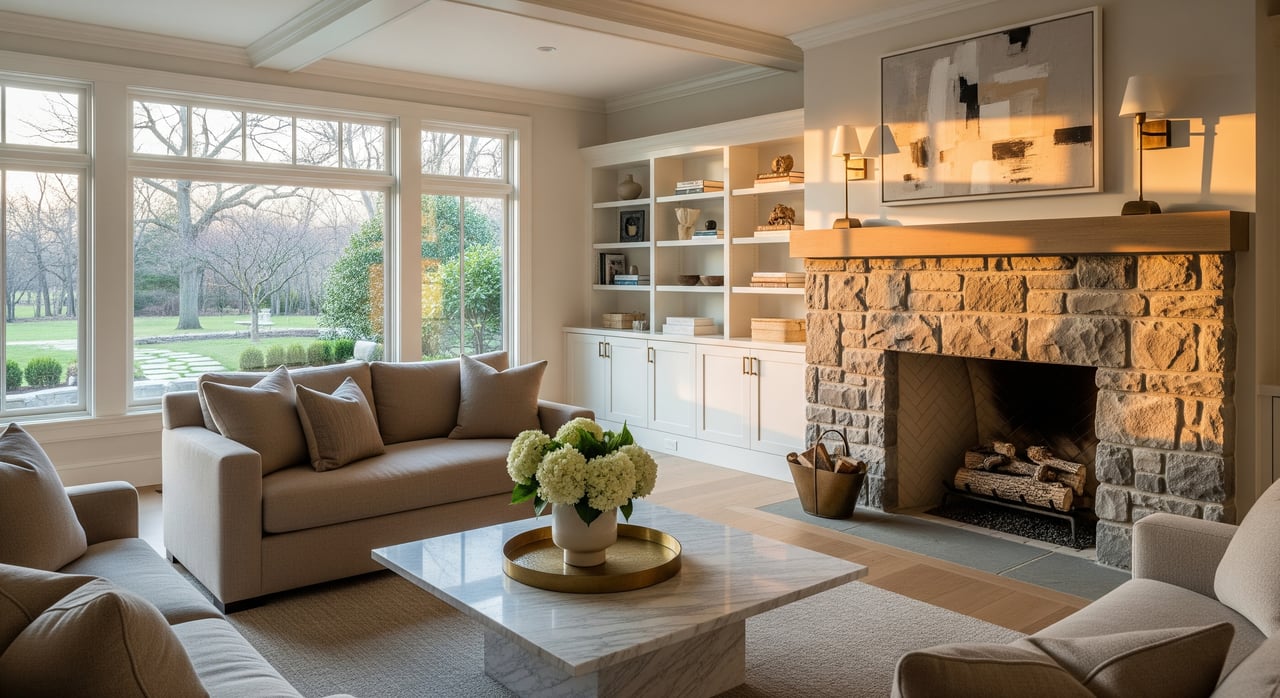
Is your listing ready to stop thumbs on Zillow and Instagram? In Blue Bell, buyers expect clean, design-forward images that feel both aspirational and real. You want photos that show off space, finish quality, and flow without overdoing it. In this guide, you’ll learn the color, lighting, and scale moves that make colonial homes, stone farmhouses, and newer builds look incredible online. Let’s dive in.
Blue Bell buyers are design-conscious and respond to images that look timeless, warm, and well edited. They want to see rooms that feel spacious, with clear pathways and a sense of everyday living and entertaining. Your goal is to show finish quality and how rooms connect, not just single corners.
Season matters. Winter light is cooler with earlier sunsets, so plan tighter windows for photos and mind curb appeal after snow or leaf drop. Spring through fall gives fuller landscaping and longer daylight that helps interiors read bright and welcoming.
A neutral base creates a calm canvas that photographs beautifully. Think soft off-whites, light warm greiges, and pale warm grays. Then add one or two accents that show up on camera without overwhelming the frame. Navy, English green, charcoal, or warm terracotta work well when used sparingly.
Avoid heavy patterns and high-saturation walls that create color casts. If you want character, keep it to a single focal wall or accessories like pillows and art. If you have visible stone or wood, match temperature: warm neutrals with warm stone, cooler neutrals with gray stone.
Classic wins. Use soft warm white on walls and trim to brighten formal rooms. Consider a subtle warm greige in living spaces. A deeper, controlled hue in a dining room or library can look rich in photos when lighting is balanced. Lean into symmetry with paired textiles and matched lamps.
Let the stone be the hero. Warm taupes, creamy whites, and soft sage tones harmonize with natural materials. Keep large textiles subdued and add layered textures like woven baskets or a wool throw. Mixed metals can read as polished but not flashy.
Newer builds often start neutral. If rooms feel too cool or clinical in photos, warm them with wood accents, layered textiles, and warm metallics. One bold accent, like a navy island or charcoal media wall, creates crisp contrast in hero shots.
Lighting can make or break a listing. You want warmth in person and true color in photos. Coordinate with your photographer on bulb choices for shoot day.
Open blinds and curtains to maximize natural light. Plan exterior shots for mid-morning or late afternoon when light is soft. For interiors, prime windows often perform best 1 to 2 hours after sunrise or before sunset, when rooms glow without harsh glare.
For showings, warm bulbs around 2700 to 3000K feel welcoming. For photos, daylight-balanced light sources around 5000 to 5500K help colors read true and reduce mixed lighting. Replace burnt-out bulbs and avoid mixing bulb colors in the same room.
Add ambient, task, and accent lighting to create depth. Use lamp shades that diffuse light and avoid visible hot bulbs in frame. A small portable lamp can fill a dark corner that cameras might exaggerate.
Rooms should look spacious and honest. Choose furniture and rugs that support scale and flow.
Pick pieces that fit the room. Swap oversized sectionals for lower-profile sofas in mid-sized living rooms. Float seating slightly off walls to create shadows that show depth. Keep walkways open to highlight circulation.
Use rugs large enough that front legs of seating touch the rug. This unifies the arrangement and avoids the “floating rug” effect that makes rooms look smaller.
Create layers: a simple coffee table vignette in the foreground, seating in the midground, and an architectural feature in the background. Use symmetry intentionally in colonials. In farmhouses and newer builds, relaxed asymmetry can feel current. Remove tiny objects near the lens that could look oversized.
Mix smooth and tactile finishes so photos feel rich but calm. Pair a glass surface or lacquer tray with a wool throw, linen pillows, or a woven basket. Limit competing patterns. If you use patterns, combine one large pattern with one small pattern and anchor the rest with solids.
Lead with a hero shot that shows scale and welcome. Keep sightlines clear to the stair or hall. In colonials, a console with matching lamps looks tailored. In farmhouses, a textured runner and a single statement pendant hint at character. In newer builds, a plant and mirror can amplify light and openness.
Angle furniture to show flow to the outdoors or adjacent rooms. Remove small knickknacks that create visual noise. Add one focal pop of color with pillows, a throw, or a styled tray.
Kitchens sell houses. Clear counters of small appliances to show workspace. Stage one simple vignette like a bowl of lemons or an open cookbook. Polish sinks and align island seating for scale and order.
Set a simple table with placemats and a single centerpiece. Make sure the chandelier is centered over the table and lights are consistent. Keep the perimeter clear so the room reads spacious.
Make the bed the star. Use layered neutral bedding with one accent throw or pillow. Balance nightstands with matching lamps. In baths, remove personal items, hang fresh towels, and check lighting for even brightness.
Mow and edge lawns, prune shrubs, and sweep hardscapes. Stage seasonal planters. Remove cars and toys so the house stands clean and unobstructed. In winter, clear ice and snow and use evergreen accents for color.
Do these for maximum impact with minimal time.
High-impact in 24 to 48 hours:
Moderate effort projects:
Smart investments for premium listings:
Remember that Instagram and listing thumbnails crop tight. Center strong verticals like staircases, fireplaces, or a kitchen island. Mix wide room shots with tasteful details such as a styled tray or door hardware. For vertical content, pick a tall subject so the crop feels intentional.
Ready to position your Blue Bell home for top-tier photos and premium attention? If you want an expert eye on color, scale, lighting, and a photo plan tailored to your property, reach out to Jamie Erfle. Together, we can create the kind of images that make buyers stop and schedule.
Jamie offers a high level of service and attention, strong negotiation skills, and an eye for detail and design.
Let's ConnectCompass
8236 Germantown Ave. Philadelphia, PA 19118